Title (title extra extra large)

Master of Science in Nursing – Family Nurse Practitioner (MSN-FNP) Track

Column Title
Cost Per Credit
Column Content (strip 0 decimals)
marketedCostPerCreditHour
Column Title
Duration
Column Content
duration
Column Title
Modality
Column Content
modality
Button (primary, tracking enroll)
Apply Now
Button Label
Open apply now modal window
Button (secondary, tracking rfi)
Request Info
Title (title large)

Overview

Column
Ref:column (content1)
Column
Ref:column (content2)
Title (title medium)

Become a highly skilled family nurse practitioner and leader in healthcare with Xavier University’s online Master of Science in Nursing - Family Nurse Practitioner (MSN-FNP) program.

Content
Xavier University has a long-standing tradition of excellence, committed to developing compassionate and competent healthcare leaders. Our MSN-FNP program prepares you to provide comprehensive, evidence-based care across the lifespan. Earn your MSN degree 100% online and in just two to three years of full-time study.
Title (title large)

Calendar

Content
Application Deadline
Fall 2026
8/1/2026
Title

100%

Online Courses

Title

2

Year Program

Button (primary, column)
Explore All MSN Programs
Button Label
Explore All MSN Programs
Title (title large)

Why Xavier's MSN-FNP Degree?

Icon
[width::100]
Content

Earn Your MSN 100% Online

Advance your nursing career with our 100% online MSN-FNP program. Get the same rigorous curriculum and personalized faculty mentorship as our on-campus degrees, with the flexibility of asynchronous online courses.

Icon
[width::100]
Content

Exceptional Graduate Outcomes

Xavier graduates are known for their strong clinical skills and commitment to community health. We prepare you to excel on the FNP certification exam and thrive in diverse healthcare settings.

Icon
[width::100]
Content

Learn from experienced nurse educators

Our nursing faculty members bring years of experience and specialized expertise to each class, ensuring you receive a well-rounded graduate education.

Column
Ref:column (image)
Column
Ref:column (content1)
Content
Content

CCNE-Accredited Online MSN Program

The baccalaureate degree program in nursing, master’s degree program in nursing, post-graduate APRN certificate program, and Doctor of Nursing Practice at Xavier University are accredited by the Commission on Collegiate Nursing Education.

Column
Ref:column (content)
Column
Ref:column (content2)
Title (title large)

Advance Your Nursing Career

Content
Our comprehensive curriculum focuses on the knowledge and skills necessary for advanced primary care practice, allowing you to treat patients from infancy through old age.
Title (title large)

Curriculum

Column
Ref:column (content)
Column
Ref:column (image)
Title (title medium)

Prepare to serve as a primary care leader with a comprehensive curriculum that emphasizes health promotion and holistic disease management for patients across the entire lifespan.

Content

MSN Core/Synthesis/Application variations for FNP: NURS 754, NURS 703 and NURS 705 are not required.

Xavier’s online MSN-FNP program consists of 46 credit hours, including:

  • 17 credit hours of nursing core courses
  • 23 credit hours of family care courses
  • 6 credit hours of synthesis/application courses including practicums and a scholarly project

Image
Title (title medium)

Online MSN Core Courses

Content
The program’s core classes revolve around three major themes: critical systematic inquiry, professional and personal development, and management of information and resources in a rapidly changing healthcare environment. In these courses, you develop a stronger understanding of the policies, ethics and theoretical foundation of the nursing practice while also diving into more technical aspects like nursing research, health care informatics and epidemiological methodologies.
Summary
NURS 500: Healthcare Ethics for Nursing Leaders (3 credits)
Main Content
This course examines ethical frameworks, such as theories of justice, rights-based ethics and virtue ethics and their significance to the delivery of health care. Analysis of ethical dilemmas focuses on differentiating what are called traditional and modern ethical frameworks for decision-making. Application will be made within the parameters of nursing’s metaparadigm (person, nursing, caring, healing, health, environment) using personal and professional processes of valuing, unconditional acceptance and deciding in the preservation of wholeness and dignity.
Summary
NURS 501: Theoretical Basis for Nursing Practice (3 credits)
Main Content
Introduction to the role of theory in knowledge development and its relationship to nursing research, practice, and administration. Critical analysis of selected theoretical models within the discipline of nursing and of theories and concepts from other disciplines as used in nursing. Concepts related to the application of the theoretical concepts in providing holistic care are explored. Examination of the application models, theories and concepts in nursing practice, administration, and research.
Summary
NURS 502: Nursing Research (3 credits)
Main Content
Exploration of modes of inquiry for systematic study of the application, use and evaluation of nursing innovations in clinical practice. Emphasis is placed on the identification and solution of clinical problems through scientific inquiry. Research is examined for evidence-based practices which include a critical review of research studies, nurse’s expertise and patient/family preferences. Discussion entails the importance of dissemination of research findings.
Summary
NURS 505: Healthcare Informatics (3 credits)
Main Content
This course is designed to facilitate the acquisition of knowledge essential for the master’s prepared holistic nurse working in complex interprofessional technological healthcare systems. This course addresses basic computer and information management competencies. The student will also learn to manage and use healthcare data in decision making. Legal, ethical, and practical ramifications of information technology in healthcare are examined. The major focus in this course is the management of information that supports improving health outcomes.
Summary
NURS 690: Healthcare Policy for Nursing Leaders (2 credits)
Main Content
This course provides an overview of health care policy, including formulating and analyzing policy at the institutional, local, state, federal, and global levels. Issues regarding the nursing work environment as well as social determinants and healthcare delivery/ regulations will be discussed. The influence of socio-cultural, economic, political, ethical, legal, and historical context on nursing and health care policy will be explored. The role of the master’s prepared holistic nurse in health policy decisions in the public and private sectors will be explicated.
Summary
NURS 864: Epidemiologic Methods in Healthcare (3 credits)
Main Content
Principles and biostatistical methods used in the study of the distribution and determinants of injury and disease through the interaction of environment and genetics in human populations (HP2020) are presented for use in the holistic development, implementation, and evaluation of primary, secondary and tertiary preventive and acute health care services in a variety of settings. Resources for epidemiological investigations within organizations and communities are introduced. Opportunities are provided to use the epidemiological and biostatistical methods of reasoning for determining causal inferences about the distribution and determinants of injury and disease (HP2020). Evidence-based innovative and evaluative health care delivery plans for clinical prevention and population health are developed using epidemiological and biostatistical data.
Title (title medium)

MSN-FNP Track Courses

Content
In your family nurse practitioner-specific classes, you explore how to provide quality health services to individuals and families from all backgrounds, including pediatric and adolescent, women’s health, and adult and geriatric care. You also participate in numerous clinical practicums to sharpen your clinical competencies, including providing preventive care, patient diagnosis and treatment, and health maintenance and management of chronic illness to individuals across the lifespan.
Summary
NURS 658: Advanced Clinical Pharmacology (3 credits)
Main Content
This course assumes basic knowledge of pharmacology and focuses on advanced pharmacology and the role of the clinical nurse leader on pharmacotherapeutics. Advanced clinical application of drug therapy and concepts relating to the mechanisms of drug actions, interactions, and adverse reactions, including immunologic-idiosyncratic-allergic drug responses will be explored. Emphasis is on pharmacotherapeutics and cultural/ethnic considerations. Current pharmacologic research is also incorporated in the course.
Summary
NURS 680: Advanced Pathophysiology Across the Lifespan (3 credits)
Main Content
Emphasis is on pathophysiology as it relates to adverse effects and illnesses in persons having acute, chronic and long-term health care problems. Knowledge of pathophysiology is used to predict illness progression and response to therapy, which is used to guide and teach patients and families regarding care.
Summary
NURS 756: Advanced Health Assessment for RNs (3 credits)
Main Content
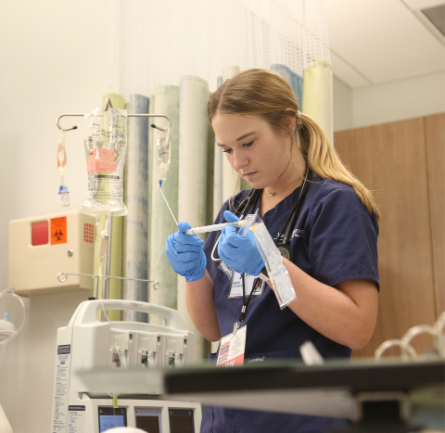
This course prepares nurses to conduct and communicate accurately comprehensive holistic, health assessments for clients and families across the lifespan. The students will learn how to perform, organize, analyze and document complete physical, psycho-social assessments. As part of health assessment, the student will identify pertinent health and potential health issues including the cultural, occupational, and environmental factors integral to those issues. The student will define appropriate health preventive and maintenance strategies to address common and complex health care concerns within an evidence-based practice framework. In addition to didactic and online discussions, students will practice advanced physical assessment skills in simulation laboratories and clinical settings under the guidance of preceptors.
Summary
NURS 760: Differential Diagnosis and Medical Decision Making (2 credits)
Main Content

This course is designed to equip Nurse Practitioner (NP) students with the critical thinking skills and clinical reasoning needed to accurately diagnose and manage a wide range of medical conditions across the lifespan. Emphasizing the process of differential diagnosis, students will learn to systematically evaluate patient symptoms, medical histories, physical exam findings, and diagnostic test results to rule in or rule out potential diagnoses. Through case studies, clinical scenarios, and evidence-based strategies, students will develop the ability to formulate a comprehensive differential diagnosis and determine appropriate interventions. Key topics include understanding common and complex medical conditions, prioritizing differential diagnoses, integrating diagnostic data, and recognizing red flags that require immediate attention. The course will also emphasize the importance of collaboration with multidisciplinary healthcare teams and effective communication with patients regarding the diagnostic process.

NURS 760 will be required for students enrolling FA26 and after.

Summary
NURS 770: Primary Care FNP Role (3 credits)
Main Content
This course is foundational to the Family Nurse Practitioner curriculum. Within this course, the student will utilize family and holistic theories needed to provide family-centered nursing care to families across the life span. This course will prepare the student to assist the family in improving or maintaining health for all members in diverse populations. Other key principles to be examined are the impact of acute/chronic or common illnesses on the family and methodologies used to promote self-care within families, particularly with family members with disabilities. Students will be prepared to provide holistic care to families experiencing transition across the lifespan. The impact of professional organizations, key leadership and management principles will be examined in relation to the care provided within a complex global healthcare area. Students must be admitted to the FNP track in order to enroll in this course.
Summary
NURS 772: Woman's Health & Family Care (3 credits)
Main Content
The purpose of this course is to prepare the Family Nurse Practitioner student to provide holistic family-centered, community-based care to families including a focus on the specific periods of transition during the childbearing years. Key psychosocial influences will be examined related to care provided for women and men in the context of reproductive health, a complex healthcare system, and the wider global community. Focused areas of study will include relevant reproductive physiology, advanced physical assessment, the range of concerns specific to women’s health including the pharmacodynamics and pharmacokinetics that can affect pregnant, lactating women and their infants. Students will engage in comprehensive assessment, development of differential diagnosis and management of common health variations including appropriate prescription medications. The course will prepare the student to work collaboratively with other interprofessional healthcare providers to provide family-centered primary, secondary and tertiary prevention to childbearing families across the lifespan. Students will explore the components of an artistic nursing practice to the family throughout their childbearing years while considering an Ignatian and holistic worldview.
Summary
NURS 774: Pediatric and Adolescent Family Care (3 credits)
Main Content
The purpose of this course is to prepare the Family Nurse Practitioner student to provide holistic family-centered, community-based care to families with infants, children, and adolescents. Key psychological influences will be examined related to care provided for child-rearing families in the context of a complex healthcare system, and the wider global community. Focused areas of study will include relevant pediatric pathophysiology, advanced physical assessment, the range of health concerns specific to newborns, infants, children, and adolescents including pharmacodynamics and pharmacokinetics. Students will engage in comprehensive assessment, development of differential diagnosis, and management of common health variations, including appropriate prescription medications. The course will prepare the student to work collaboratively with other inter-professional healthcare providers to provide family-centered primary, secondary, and tertiary prevention to child-rearing families across the lifespan. Students will explore the components of an artistic nursing practice to infants, children, adolescents and the family while considering an Ignatian and holistic worldview.
Summary
NURS 776: Adult and Geriatric Family Care (3 credits)
Main Content
This course is designed to prepare the Family Nurse Practitioner with a theoretical and practice foundation of acute and chronic health care problems common to adult and geriatric patients. Emphasis is placed on health promotion, prevention, assessment, diagnosis, and interprofessional management strategies. Students use evidence-based care and clinical guidelines to provide safe, holistic and cost-effective care to the adult and geriatric patient in a variety of healthcare settings.
Content

*Indicates the number of didactic credit hours to practicum credit hour. Each practicum credit hour is 8 clinical contact hours: 1:8. The total number of practicum hours required for the FNP is 600.

Pre/Co-requisites: NURS 770 is pre/co-req for NURS 775/776 and is a pre-req for NURS 773/774 and NURS 771/772.

Title (title medium)

Online Synthesis and Application Courses

Summary
NURS 771: Woman's Health & Family Care Practicum (1 credit*) ~150 clinical hours
Main Content
The purpose of this course is to provide the Family Nurse Practitioner student the opportunity to apply concepts of holistic family-centered, community-based care to families including a focus on the specific periods of transition during the childbearing years. Students will engage in comprehensive assessment, development of differential diagnosis, and management of common health variations, including appropriate prescription medications. Students will employ current evidence-based practice strategies to provide safe, holistic, patient-centered care. Students will work collaboratively with other inter-professional healthcare providers to provide family-centered primary, secondary, and tertiary prevention to childbearing families across the lifespan. Students will apply the components of artistic nursing practice to childbearing families within an Ignatian and holistic worldview.
Summary
NURS 773: Pediatric and Adolescent Family Care Practicum (1 credit*) ~150 clinical hours
Main Content
The purpose of this course is to prepare the Family Nurse Practitioner student to apply concepts of holistic family-centered, community-based care to families with infants, children, and adolescents. Students will engage in comprehensive assessment, development of differential diagnosis, and management of common health variations including the prescription of appropriate medications. Students will work collaboratively with other inter-professional healthcare providers to provide family-centered primary, secondary, and tertiary prevention to infants, children, adolescents, and their families. Focused areas of study will include relevant pediatric pathophysiology, advanced physical assessment, the range of health concerns specific to newborns, infants, children, and adolescents including pharmacodynamics and pharmacokinetics. Students will apply the components of an artistic nursing practice to infants, children, adolescents and their families within an Ignatian and holistic worldview.
Summary
NURS 775: Adult and Geriatric Family Care Practicum (1 credit*) ~150 clinical hours
Main Content
The purpose of this course is to prepare the Family Nurse Practitioner student to provide holistic family-centered, community-based care experiencing acute and chronic health problems common to adult and geriatric patients. Students will engage in comprehensive assessment, development of differential diagnosis, and management of common health variations, including appropriate prescription medications. Students will employ current evidence-based practice strategies to provide safe, holistic, and cost-effective care to the adult and geriatric patient in a variety of healthcare settings. Students will work inter-professionally to provide family-centered care including primary, secondary and tertiary prevention. Students will apply the components of artistic nursing practice to adult and geriatric clients and their families within an Ignatian and holistic worldview.
Summary
NURS 787: FNP in Practice Practicum (1 credit*) ~150 clinical hours
Main Content
The purpose of this course is to provide a practicum experience for the FNP student, building upon the student’s proficiency in comprehensive health assessment across the lifespan within the context of family, community, and culture. Using an evidence-based practice framework, the student will apply health promotion, disease prevention, and screening recommendations to assess, diagnose, and manage the most common acute and chronic conditions seen in primary care. Students will utilize advanced pathophysiology, pharmacologic interventions, and advanced assessment skills while taking a holistic approach in diagnosis and developing treatment plans for individuals and families according to current scare standards in various settings.
Summary
NURS 797: Scholarly Project (2 credits)
Main Content
This course is the development of a scholarly project that addresses a phenomenon, issue, or problem related to the discipline of nursing. A variety of options are available to demonstrate the comprehensive and scholarly nature of the final product. The following options are possibilities, but the student is not limited to these for the scholarly project: conducting a research study; developing a concept analysis paper; providing an innovative solution to care delivery, an administrative, advanced practice, educational, healthcare law, forensics, informatics issue or opportunity; developing a creative potentially fundable, health-related proposal; or developing a business or educational proposal. This capstone project is a synthesis and integration of all previous graduate coursework.
Title (title large)

Admission

Content

Xavier accepts applications to our MSN programs on a rolling basis. Once admitted into the program, you may start online classes in the fall or spring semesters.

Application Deadline: August 1, 2026
Start: Fall 2026

Column
Ref:column (accord)
Column
Ref:column (image)
Summary
Admission Requirements
Main Content

To receive acceptance into the online MSN - FNP program, you must meet the following requirements:

  • Be a registered nurse with an unencumbered United States RN license in the state where practicum experiences are to be completed. A minimum of 1 year of nursing experience is required, a strong candidate will have a minimum of 2 years of nursing experience.
  • Hold a BSN and be a graduate of an accredited college or university’s nursing program (the College of Nursing will verify accreditation to ensure it meets requirements). Transfer credits are accepted only from regionally accredited institutions.
  • An undergraduate statistics course with a grade of C or better is required for admission.
  • Applicants who do not have a BSN (BS in Nursing) cannot be accepted into the online MSN programs but should consider the MSN direct entry as a second degree – MIDAS Program.
  • A strong applicant will have a 3.0 GPA.

The admission committee considers all information contained in the admission application, including prior grades, test scores and evidence for potential for success in graduate study.

No admission tests (i.e. GRE) are required for applying to this graduate nursing program.

Summary
Application Materials
Main Content
  • Free Online Application
  • Official Transcript
    • One official transcript directly from all colleges or universities that you have attended for any undergraduate and graduate course work. Applicants must have a degree from a regionally accredited university. Send transcripts to:
      • Xavier University
        ATTN: Admission Processing Center
        3800 Victory Parkway
        Cincinnati, OH 45207-5131
      • For electronic transcripts, send to:
        xuadmit@xavier.edu
  • Current Resume and Personal Essay
    • Current résumé or curriculum vitae outlining all professional nursing experience, including facility/organization name & location, position and employment dates.
    • A 3-page goal statement that addresses the following points:
      • Why are you applying to Xavier University?
      • What MSN track are you applying for and why? How do you plan to use the degree and specialty?
      • What experiences have prepared you for graduate study? (or have influenced your desire to pursue graduate studies)
      • Graduate school is challenging and a large time commitment, especially with working, family, other responsibilities. What are your plans and strategies for being successful in your graduate program?
      • We also consider the writing quality of this essay. If writing is a challenge for you, also address strategies to help you in this area.
  • Professional References
    • Three professional recommendations, (Please provide contact information for recommenders in the online application. An electronic form will be sent via email). A strong candidate will provide:
      • At least one reference from a direct manager or supervisor who evaluates their clinical work.
      • Two references will be from someone with a master’s or doctoral degree.
  • Personal Interview
    • A personal or phone interview may be required for the MSN-FNP program.
Summary
State Authorization
Main Content
Due to state regulations regarding the delivery of distance education, as well as requirements of each individual state board of nursing, Xavier is not currently able to accept applications from all states into all of its online programs.

View the complete list of approved states on the State Authorization page.

Summary
International Admission
Main Content

Xavier welcomes students from outside the United States to enroll in its online programs. However, some countries do not formally recognize foreign online degrees. This may have implications for enrolling in subsequent degree programs or for securing employment requiring these credentials. It is students’ responsibility to determine whether the online degree will be recognized in their country of residence or in any country in which they plan to work.

Additionally, students should inquire in their country of residence how the collection of student data may be used and whether they will be subject to additional withholding taxes in addition to the cost of tuition.

  • All international students are strongly encouraged to submit an official third-party course-by-course evaluation of their high school and/or college transcripts from an international credential evaluation service accredited by the National Association of Credential Evaluation Services.
  • International students must pass either the TOEFL or IELTS exam if English is your second language.
  • International students may have additional application requirements. Find more information on the International Admission page.

Note: International students in the U.S. cannot enroll in an online degree program to fulfill the legal requirement for an F-1 or J-1 visa.

Image
Title (title large)

Tuition and Fees

Column
Ref:column (content1)
Column
Ref:column (content2)
Title (title medium)

Get More from Your Graduate Education with Xavier

Content
At Xavier, we understand that no two graduate programs and no two students are alike. Therefore, we structure every online degree and certificate program to address the unique needs of individual students and have created unique fee structures for each program as well.
Button
VIEW FINANCIAL AID OPTIONS
Button Label
View Financial Aid Options
Title (title large)

Tuition

Content
MSN: $739
Column
Ref:column (image)
Column
Ref:column (content)
Image
Title (title medium)

Fees

Content
  • Liability Insurance (per semester with practicum): $18
  • Student ID Fee: $15
  • Graduate Student Association Fee, degree-seeking full-time: $15 (per semester)
  • Graduate Student Association Fee, degree-seeking part-time: $10 (per semester)

Full-time students can complete the program in as few as 10 semesters.

Content (copy small)
The amounts listed are for the 2026-2027 academic year, and include classes from Fall 2026 through Summer 2027. Tuition cost is per credit hour unless otherwise stated. For the full, official listing, please visit xavier.edu/costs. Xavier University reserves the right to correct any computational or clerical errors.
Title (title large)

Testimonials

Subtitle (title-medium)

Hear From Our MSN Students

Quote
“My mentors, as well as my peers, genuinely cared about my success. I learned the skills necessary to transform my career, and even after I left, the Xavier community has still been there for me, to answer questions or give advice.”
Cite
Xavier University MSN-FNP Graduate
Quote
“I was 50 years old when I decided to go back to further my education in the Family Nurse Practitioner Track of Xavier’s Master of Science in Nursing program. My academic advisor and my professors who gave me the confidence to enroll, and all along the way, they were my cheerleaders.”
Cite
Xavier University MSN-FNP Graduate
Quote
“I was able to work full time, manage a family, and have a life outside of school while taking classes online. I loved that my professors cared for me as a student but also as a peer.”
Cite
Xavier University MSN-FNP Graduate
Eyebrow
Faculty Spotlight
Title (title medium)

Terri Enslein, EdD, MSN, RNC-OB, CNE

Content
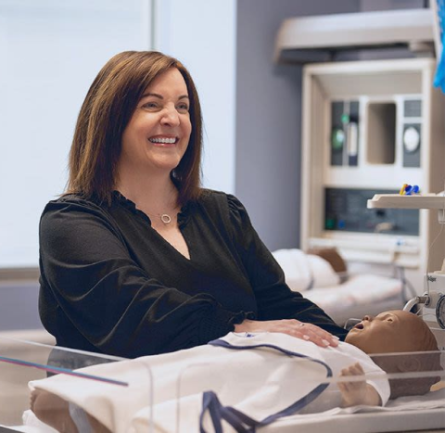
Enslein's dedication to her students, combined with Xavier's innovative curriculum and strong community partnerships, prepares graduates for successful careers in the ever-evolving field of nursing.
Button (secondary)
Read More
Button Label
Read More
Image
Eyebrow
none
Title (title medium)

Holistic Nursing Certification

Content
At Xavier, we’re proud to have our MSN program as one of only 17 online programs in the U.S. to be endorsed by the American Holistic Nurses Credentialing Corporation (AHNCC).
Button (secondary)
Learn More
Button Label
Learn More
Image
Title (title large)

Certificate

Title (title large)

Frequently Asked Questions

Summary
Is Xavier’s online MSN-FNP degree program accredited?
Main Content

Xavier’s online MSN-FNP degree program is accredited by the Commission on Collegiate Nursing Education (CCNE), the premier accrediting agency for baccalaureate and graduate nursing programs. The Ohio Board of Nursing (OBN) has also approved the program.

With this accreditation, you can rest assured that you receive a high-quality graduate education built on strong pedagogical principles and a rigorous curriculum, equipping you to provide top-tier patient-centered care.

Summary
What certifications does the online MSN-FNP program prepare students for?
Main Content

We are proud to be one of only 17 online MSN programs in the U.S. to be endorsed by the American Holistic Nurses Credentialing Corporation (AHNCC). With this distinguished endorsement, our program qualifies you to sit for the Holistic Nurse Certification (HNC) examination.

Additionally, the MSN FNP program and the Post-Master’s Family Nurse Practitioner Certificate prepare you for Family Nurse Practitioner Certification (FNP-BC) through the American Nurses Credentialing Center (ANCC) or the Family Nurse Practitioner (FNP) Certification through the American Association of Nurse Practitioners Certification Board (AANPCB). Equipped with your FNP certification, you can tackle advanced career opportunities, increase your earning potential and help more families.

Summary
Will my MSN degree say "online?"
Main Content
No, Xavier awards the MSN based on your ability to meet coursework standards, regardless of course delivery mode. Whether your program is in person or online, you earn a Master of Science in Nursing degree.
Summary
Will students be expected to participate at a specific time during this?
Main Content
Participation expectations vary by professor. Courses are asynchronous with no set meeting times; however, practicum and scholarly project courses may include an online synchronous session (at the discretion of the instructor) at the end of the semester for student sharing/collaboration purposes. The nursing administration and faculty in this program understand the importance of flexibility for working professionals.
Summary
Does this MSN program offer state nursing licensure?
Main Content
None of the graduate nursing programs offered here include nursing licensure. RN licensure is a prerequisite for admission to these programs.
Summary
How long is the program? Is it possible to attend part-time?
Main Content
The full time online MSN-FNP program is 28 months. It is possible to attend part-time.
Summary
Am I required to pass a certification exam to receive licensure as a nurse practitioner?
Main Content
Yes. To become licensed as a nurse practitioner, you are required to pass a national certification exam in your chosen specialty.
Content (copy small)

Online MSN - Family Nurse Practitioner (FNP) Track Program at Xavier University

Xavier University’s online Master of Science in Nursing - Family Nurse Practitioner (MSN-FNP) program equips you with a broad range of advanced clinical skills and a revitalized passion for providing family-centered primary care to your community. During the program, you engage in intensive, theory-based coursework, participate in hands-on clinical practicums, and collaborate with your classmates and faculty. Through this integrative learning experience, you deepen your nursing expertise and open doors to new professional opportunities. Earn your MSN degree 100% online and in just two to three years of full-time study.

Xavier University’s College of Nursing prepares undergraduate and graduate students as professional nurses to meet the needs of diverse populations in an ever-changing, highly technical health-care environment. Graduates have the skills to practice nursing today and to be nurse leaders tomorrow in holistic health-care delivery with an educational foundation grounded in Jesuit values. Our graduates are well-respected in the health-care community as knowledgeable, professional, and ethical and prepared to excel in meeting challenges in health-care delivery. Xavier’s Nursing programs are accredited by the Commission on Collegiate Nursing Education and endorsed by the American Holistic Nurses Credentialing Corporation.

Xavier University is a private university located in Cincinnati, Ohio, providing a liberal arts education in the Jesuit Catholic tradition. Founded in 1831, the University is the sixth-oldest Catholic university in the nation. It has been ranked among the top 10 master's-level universities in the Midwest by U.S. News & World Report for the past two decades. The Princeton Review names it one of the "Best 385 Colleges in America."

Connect
{xf::fragments/connect}
Image