How Do Clinicals Work During Online Nursing Programs?
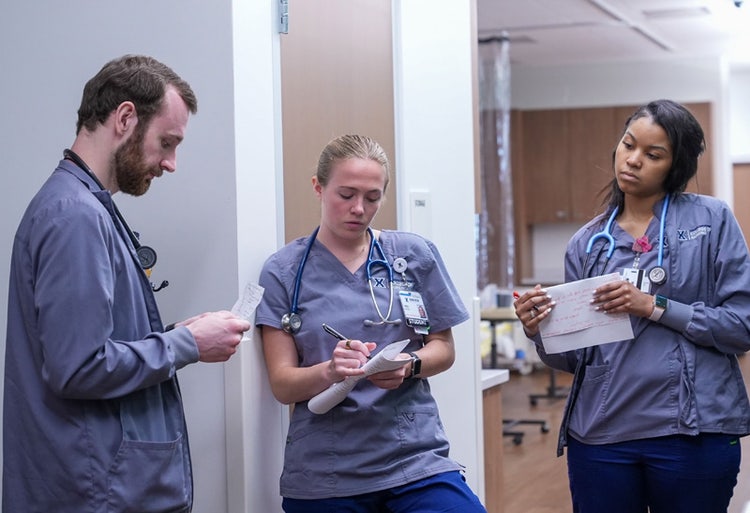
Online nursing programs can deliver coursework virtually and still require supervised experience in an approved professional setting.
Depending on the program, that experience may involve direct patient care, teaching, forensic nursing, leadership or population health. You may see it described as a clinical practicum, synthesis/application course or clinical immersion.
At Xavier University, those requirements vary significantly by pathway. The online nurse practitioner tracks each include 600 clinical hours, Nursing Education includes two 90-hour practicums and the DNP requires 1,000 total qualifying immersion hours, with up to 500 previous hours potentially accepted.
This guide explains what those terms mean, how applied experiences fit with online coursework, and what to confirm before choosing a program.
Key Takeaways
- Online nursing coursework can be virtual while required practice experiences occur in approved professional settings.
- Xavier’s FNP, PMHNP and AGPCNP tracks each require 600 clinical hours.
- Nursing Education and Forensics require 180 practicum hours each.
- Xavier’s DNP requires 1,000 total qualifying immersion hours and may accept up to 500 previous hours.
- Site, preceptor, licensure and state-authorization expectations vary, so familiarize yourself with the requirements for your specific pathway.
What Are Clinicals in an Online Nursing Program?
In everyday conversation, nursing students often use “clinicals” to describe any supervised experience that helps them apply what they learn.
Program language is usually more precise. A nurse practitioner pathway may use clinical practicum for direct patient-care experience. Nursing Education may use practicum for supervised teaching. A DNP may use clinical immersion for leadership, population-health or systems-focused practice.
The common thread is applied learning. These experiences are designed to help students connect online coursework with supervised practice in a setting that aligns with the program’s goals.
How Online Coursework and In-Person Applied Learning Work Together
Online nursing programs are designed to give working nurses more flexibility, but flexible coursework does not always mean there are no hands-on requirements.
Students may complete lectures, readings, assignments, discussions, and exams online. Then, depending on the pathway, they may complete supervised applied experiences in approved settings.
Xavier's online nursing programs primarily use asynchronous coursework, although certain practicum, project or seminar experiences may include live online sessions at the instructor's discretion.
You should review the structure of your selected program carefully before assuming every requirement is fully asynchronous.
Clinical, Practicum, Synthesis and Immersion: What These Terms Mean
These terms are related, but they are not interchangeable. A scholarly project, for example, is not automatically a clinical placement or a set of patient-care hours. And a nurse practitioner practicum may involve supervised patient care, while a Nursing Education practicum may involve teaching-related experiences. DNP immersion hours may focus on systems, leadership, population health, or project implementation.
When reviewing your program requirements, pay attention to the exact terminology used. It can tell you whether the requirement is patient-care focused, teaching focused, project based, or tied to broader practice leadership.
How Clinical and Practicum Requirements Vary by Xavier Nursing Pathway
Clinical and practicum requirements vary by program. The number of hours, setting expectations, preceptor requirements, and type of applied learning can differ depending on whether you choose a nurse practitioner track, Nursing Education, Forensics, a post-master’s certificate, or the DNP.
Post-master’s certificate and clinical requirements depend on the specialty and the applicant’s previous graduate preparation, so review the individual certificate curriculum rather than assuming it matches the corresponding MSN track exactly.
What Students Actually Do During Practicum or Clinical Experiences
What you do depends on the role you are preparing to enter.
Nurse Practitioner Practicums: Apply assessment, diagnostic reasoning, health-promotion and treatment-planning skills under supervision. FNP experiences span patient populations across the lifespan, PMHNP practicums address psychiatric assessment and treatment and AGPCNP practicums focus on adult and older-adult primary care.
Nursing Education Practicums: Apply teaching and learning principles through supervised teaching experiences that allow students to apply instructional strategies in academic or clinical education settings.
Forensics: The MSN–Forensics curriculum includes synthesis/application courses, practicums and a scholarly project designed to apply forensic nursing concepts in professional practice. Specific practicum experiences depend on course requirements.
DNP Immersion: Apply doctoral learning to leadership, population health, and systems-level practice. The exact experience should align with the student’s approved plan and program requirements.
In every pathway, the purpose is not merely to record hours. It is to apply graduate learning in a setting that supports the intended professional role.
Who Approves the Site, Preceptor and Hours?
Your practicum site is the professional setting where you complete your applied learning experience. Your preceptor is the qualified professional who guides and supports you as you work toward the objectives of the course.
The process for identifying and approving sites and preceptors can vary by nursing pathway. Program faculty can answer questions about practicum requirements and the approval process. Students should confirm preceptor and site requirements before beginning clinical experiences.
Before committing to a site or beginning your hours, ask:
- Who is responsible for identifying the site and preceptor?
- What qualifications must the preceptor meet?
- Who gives final approval?
- When can your practicum hours officially begin?
- How will you document your hours and experience?
- What support is available if your proposed site or preceptor is not approved?
Confirm that your site, preceptor and planned experience meet program requirements before beginning a practicum. Depending on the pathway, you may also need approval forms, hour logs or evaluations.
Starting early gives you time to resolve questions, find another site if needed and plan around work and personal responsibilities. A Xavier program representative or faculty advisor can help clarify your pathway’s requirements.
Can You Complete Clinicals Near You or Where You Work?
Depending on the program, you may be able to complete a practicum near home or in your current professional setting. Approval is not automatic, however, because the experience must support the course's objectives and specialty requirements.
Workplace eligibility varies by nursing pathway and must be approved based on program requirements. Ask whether:
- Your workplace can be considered as a site
- The experience must differ from your regular responsibilities
- The setting serves the required population
- An eligible preceptor is available
- The site is permitted in your state and program
Have the site reviewed before making work or scheduling commitments.
Why State Authorization and RN Licensure Matter
Even when coursework is online, your location can affect whether you may enroll and where you may complete a practicum.
Xavier requires an unencumbered U.S. RN license in the state where the practicum will occur. Xavier also cannot currently accept applicants from every state into every online nursing program because of distance-education regulations and individual nursing-board requirements.
When applying, you should confirm:
- Whether Xavier offers your program in your state
- Whether your RN license covers the practicum location
- Whether the program supports your intended certification or licensure jurisdiction
- What steps to take if you move during the program
How Working Nurses Should Plan for Practicum Hours
Clinical terms may require a different schedule from coursework-only terms. Xavier’s nurse practitioner programs currently divide 600 hours among four approximately 150-hour practicums, but the weekly schedule depends on the course calendar, site and preceptor availability.
Before a practicum term begins, consider:
- Work-shift flexibility
- Travel time
- Preceptor availability
- Family and personal responsibilities
- Documentation and course assignments
- Any live online sessions connected to the practicum
Ask for the course sequence early so you can anticipate when your time commitment will change.
Students who plan early are better positioned to manage practicum expectations alongside professional and personal responsibilities.
What Should You Ask Before Applying?
Before applying to an online nursing program with clinical, practicum, or immersion requirements, ask practical questions about timing, site approval, preceptor expectations, and state eligibility.
Important questions include:
- How many supervised hours does this pathway require?
- When do practicum or immersion courses occur?
- Who identifies and approves the site and preceptor?
- What support is available during the placement process?
- Can my workplace or a nearby facility be considered?
- Is my state and intended practicum location eligible?
- How are hours documented and evaluated?
These questions can help you understand whether the program fits your schedule, location, and professional goals before you apply.
Explore Xavier University Online Nursing Programs
Xavier’s online nursing pathways combine flexible coursework with role-specific practice. That may mean direct patient care in a nurse practitioner practicum, supervised teaching in Nursing Education, forensic nursing application or doctoral immersion in leadership and population health.
Start with the Nursing Programs overview page if you are still comparing options. Review the MSN overview page if you are interested in graduate nursing pathways, or go directly to the program page that best matches your goals.